All You Required to Understand About Robotic Vision and Its Applications in Advanced Optical Measurement Equipments
Robotic vision stands for a considerable advancement in the crossway of computer system vision, expert system, and equipment understanding. This technology boosts the precision of optical measurement systems, making it possible for real-time data evaluation and enhanced quality control. Its effect extends multiple markets, from making to healthcare. Nonetheless, the evolving landscape of robotic vision questions regarding future capacities and applications (fibre testing equipment). What advancements lie in advance in this transformative area?
Understanding Robotic Vision: Secret Concepts and Technologies
Robotic vision incorporates the technologies and methodologies that enable machines to translate and comprehend aesthetic details from their environment. This field integrates components of computer system vision, expert system, and device learning to facilitate automatic decision-making based upon aesthetic information. Secret ideas include image processing, which involves the enhancement and analysis of images to extract significant functions, and item acknowledgment, which enables makers to determine and categorize things within a scene.
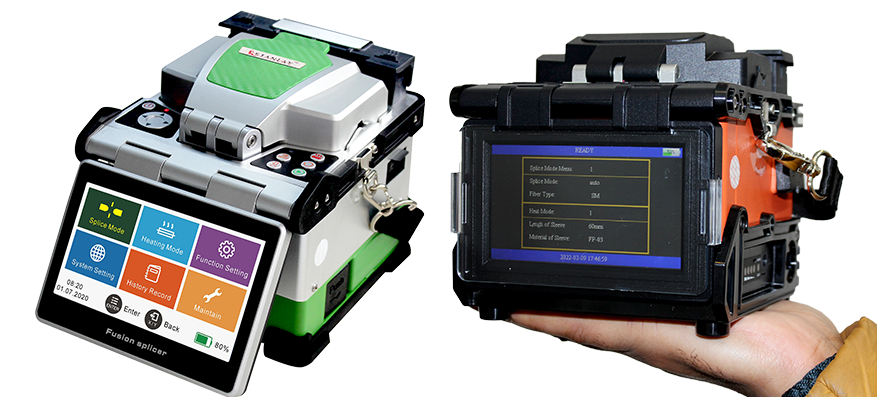
The Integration of Robotic Vision With Optical Measurement Solutions
As markets significantly demand precision and performance, the combination of robotic vision with optical measurement systems has become a transformative approach. This synergy permits robots to view and analyze their surroundings, enhancing the capacity of optical measurement systems to evaluate and evaluate things with unrivaled precision. By furnishing optical sensors with advanced imaging innovations, robotic vision enables real-time information collection and handling, facilitating instant adjustments to measurement parameters.
Moreover, the mix encourages automated systems to identify variants in measurements, surface area top quality, and placement, which are critical in quality control processes. Enhanced algorithms, such as artificial intelligence, further augment this combination by enhancing the systems' ability to adjust to various atmospheres and situations. As a result, the assimilation not just enhances measurement processes but additionally decreases mistakes, making certain that items satisfy strict industry criteria, consequently strengthening the function of robotic vision in the future of optical dimension systems.
Applications of Robotic Vision in Production
In modern-day manufacturing atmospheres, the use of vision systems has changed production processes by allowing equipments to carry out jobs with amazing accuracy and speed. Robotic vision systems are progressively employed for quality assurance, where they inspect products for issues and guarantee adherence to requirements. These systems utilize cameras and progressed formulas to assess products in real-time, significantly minimizing the risk of human mistake.
Additionally, robot vision assists in automation in production line, enabling robotics to properly recognize elements and assemble them with minimal downtime. This innovation also enhances inventory management, as vision systems can check supply levels and find discrepancies, guaranteeing a smooth supply chain.
Robotic vision help in the implementation of wise manufacturing facilities, where information from vision systems can be incorporated with other innovations to enhance process (optical measurement system). Overall, the applications of robotic robotic vision vision in manufacturing demonstrate its essential duty in enhancing efficiency, quality, and productivity across different fields
Robotic Vision in Healthcare: Revolutionizing Patient Care

In recovery, robotic vision help in monitoring person progress and customizing therapy sessions to specific needs. It sustains doctor by automating jobs such as data collection and individual monitoring, enabling for even more time to concentrate on direct individual interaction. Furthermore, robot vision boosts telemedicine by enabling remote medical diagnosis and digital assessments, connecting the void between clients and healthcare carriers. In general, the application of robot vision in medical care is revolutionizing client treatment, bring about enhanced results, performance, and patient complete satisfaction.
Future Fads and Growths in Robotic Vision Technology
The rapid development of robot vision technology promises to further improve its applications across different markets, consisting of healthcare. Future trends indicate a considerable shift towards integrating expert system and equipment discovering, enabling systems to gain from vast datasets and improve precision with time. Enhanced sensor technologies and deep learning formulas are anticipated to fine-tune item recognition capacities, permitting robots to translate complex environments more properly.

The integration of increased fact (AR) with robotic vision will likely revolutionize exactly how robotics aid in surgical procedures and diagnostics. This harmony will certainly facilitate real-time data visualization, boosting decision-making procedures. Furthermore, miniaturization of elements will bring about even more portable and functional robotic vision systems ideal for a variety of jobs. As these advancements unfold, sectors will certainly witness boosted automation and efficiency, strengthening robot vision as a foundation of ingenious technical remedies.
Regularly Asked Inquiries
What Are the Main Elements of a Robotic Vision System?
The major components of a robotic vision system consist of video cameras for photo capture, processors for information analysis, formulas for interpretation, and actuators for motion. With each other, these aspects make it possible for robots to regard and communicate with their setting effectively.
Just How Does Robotic Vision Improve Accuracy in Measurements?
Robotic vision boosts measurement precision by utilizing sophisticated imaging modern technologies, allowing precise item discovery and spatial analysis. This ability lowers human error, enhances repeatability, and permits real-time changes, inevitably enhancing total measurement reliability and efficiency.
What Industries Benefit The Majority Of From Robotic Vision Innovation?
Different markets benefit significantly from robot vision innovation, consisting of manufacturing, health care, agriculture, and logistics. These industries use improved precision, effectiveness, and automation, causing boosted efficiency and minimized operational costs in their particular processes.
Can Robotic Vision Systems Work in Low-Light Conditions?
Robotic vision systems can indeed function in low-light conditions, utilizing advanced sensing units and formulas to improve picture clearness. This capability enables them to carry out efficiently in various environments, consisting of commercial and surveillance applications, despite very little illumination.
What Are the Expenses Associated With Executing Robotic Vision?
The expenses related to applying robotic vision vary considerably, influenced by components such as cameras, software program, and integration. Extra expenditures consist of maintenance, training employees, and prospective upgrades to existing systems, which can gather with time.